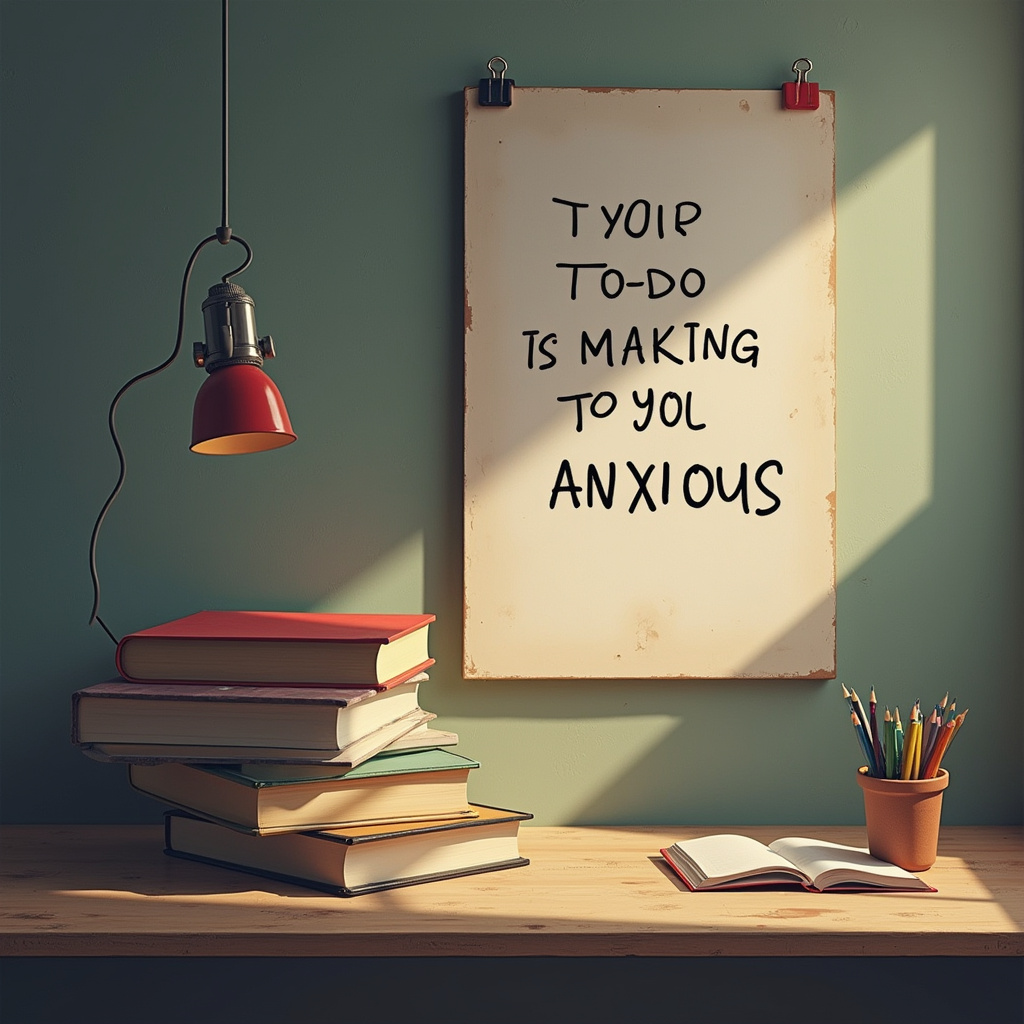
The endless scroll of undone tasks
You know that feeling. You open your to-do list app—maybe it’s Todoist, maybe a crumpled sticky note—and your chest tightens. There are 47 items glaring at you. Forty-seven. Who can breathe with that? Honestly, I’ve seen this go wrong so many times: a list that starts as a helpful nudge morphs into a monument to your inadequacy. Every unchecked box whispers, “You’re falling behind.” And the longer the list, the louder the whisper. It’s not just clutter; it’s a psychological weight. A 2018 study in the Journal of Personality and Social Psychology found that unfinished tasks linger in our minds, hijacking our attention until we either complete them or make a concrete plan. So your brain is literally stuck on loop, replaying all the stuff you haven’t done. How is that helpful?
Why traditional lists fail us
But here’s the thing: most to-do lists are just brain dumps. They mix picking up dry cleaning with “redesign career path.” That’s chaos. Your brain can’t prioritize when everything looks equally urgent. And we add tasks without removing any—so the list only grows. It becomes a historical record of your procrastination, not a tool. Then there’s the dopamine trap. Checking off a small, easy task feels good, so we do those first. Answer an email? Check. File a document? Check. Meanwhile, the big, meaningful work sits there, gathering digital dust. By day’s end, you’ve been busy but not productive. Sound familiar? Why do we keep using a system that sets us up for failure?
A kinder, smarter alternative
I stumbled on a different approach after reading about the Ivy Lee Method, which dates back to 1918. It’s almost laughably simple. At the end of each day, you write down no more than six tasks for tomorrow. Six. Not 47. Then you prioritize them. The next day, you start with the first task and don’t move to the second until it’s done. Any unfinished tasks roll over to the next day’s list. That’s it. No fancy app, no color-coding. I’ve been using a plain notebook for this, and the difference is stark. The limit forces you to decide what actually matters. You stop treating your list like a catch-all and start treating it like a compass. And because you’re not drowning in options, you can focus. Deeply. What if the secret to getting more done is simply doing less?
But what about all the other stuff?
Here’s where most people panic: “But I have more than six things to do!” Of course you do. That’s why you need a separate parking lot for ideas and minor tasks. I call mine the “maybe later” list. It’s a single sheet where I dump everything that pops into my head—buy birthday gift, research standing desks, learn to make sourdough. This list isn’t for today. It’s a holding pen. Once a week, I scan it and pull a few items into my daily six if they still matter. Often, they don’t. The urgency fades. This separation is crucial because it keeps your daily list clean and your mind clear. You’re not ignoring things; you’re just admitting you can’t do everything right now. And that’s not failure—it’s realism. Does it really need to be done today, or are you just addicted to the feeling of being busy?
Start tomorrow, not today
Look, I’m not saying you’ll never feel anxious again. But shrinking your daily focus can shrink the noise. Try this tonight: before you shut down, write down just three to six tasks for tomorrow. Be ruthless. What will actually move the needle? Then, when you start your day, ignore everything else. Protect that list like it’s a fragile thing. You’ll stumble, you’ll add too many items sometimes, you’ll forget to plan. That’s fine. The goal isn’t a perfect system; it’s a calmer mind. And maybe, just maybe, you’ll look at your list and feel a flicker of control instead of a wave of dread. I mean, isn’t that worth a shot?