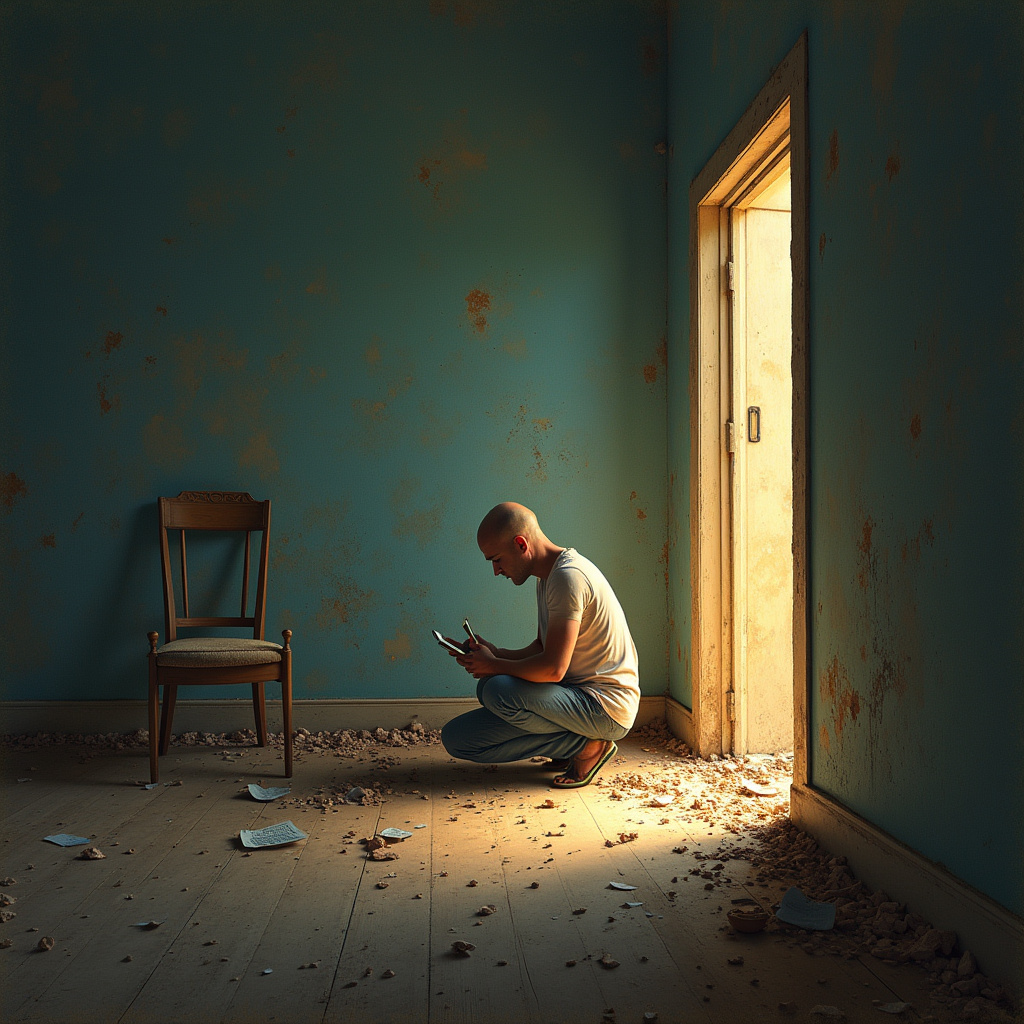
I remember sitting on my grandmother’s porch in the summer of 1998, staring at a crack in the ceiling for what felt like hours. No phone. No music. Just the hum of a distant lawnmower and the occasional creak of the swing. My brain, left to its own devices, started spinning stories about the people who might’ve lived in that house before us. I was 10, and I didn’t know it then, but I was practicing the lost art of boredom. We’ve sanitized our lives of empty moments, haven’t we? Every gap is now filled with a scroll, a notification, a podcast. But what if that constant stimulation is quietly smothering our most creative selves?
Honestly, I find this part often gets ignored: boredom isn’t laziness. It’s a neurological reset. When you’re doing nothing, your brain slips into what scientists call the default mode network—a state where it connects disparate ideas, replays memories, and simulates possible futures. It’s the mental equivalent of letting a field lie fallow. Back in 2014, a study from the University of Central Lancashire found that people who completed a boring task (copying numbers from a phone book) before a creative challenge came up with 41% more uses for a paper cup than those who didn’t. Forty-one percent! That’s not a fluke. That’s your mind, unshackled, doing its best work. And yet, we treat a blank five minutes like a crisis to be solved.
Why does an empty moment feel so unbearable now?
You’ve felt it. That twitch to grab your phone the second a line forms or a friend steps away to the restroom. It’s not your fault—not entirely. Tech companies have engineered their products to hijack your attention with the precision of a casino slot machine. The average person touches their phone 2,617 times a day, according to a 2016 study by Dscout. Each tap is a tiny surrender of potential daydreaming. But here’s the thing: creativity isn’t born from input. It’s born from the space between input. When you’re bored, you’re not “wasting time.” You’re composting experience. That weird half-thought about a talking cat and your grocery list? It might just become your next big idea—if you let it sit.
And let’s be real: some of history’s most celebrated minds were professional loafers. Charles Darwin took long, meandering walks along his “thinking path” at Down House, often stopping to stare at nothing in particular. Steve Jobs famously credited his creativity to boredom, saying it allowed his mind to “wander and connect things.” These weren’t moments of passive consumption. They were active, generative voids. So why do we feel guilty when we’re not “productive”? Because we’ve confused motion with progress. A quiet mind isn’t an empty mind. It’s a mind preparing to surprise you.
Can we really retrain ourselves to embrace the void?
Start small. Tomorrow, when you’re waiting for your coffee, don’t pull out your phone. Just stand there. Feel the awkwardness. Let your eyes drift to the menu board you’ve seen a hundred times. Notice the way the barista’s hands move. You’ll feel a flicker of resistance—that’s the addiction talking. But after 90 seconds, something shifts. Your shoulders drop. A random memory surfaces. A solution to a problem you’d shelved weeks ago suddenly clicks into place. That’s not magic. That’s your default mode network firing up, grateful for the break. I’ve tried this myself, and the first few times, I felt like I was detoxing from a drug. But now? I guard those empty minutes like a secret weapon.
So here’s a radical proposal: schedule boredom. Put a 10-minute block in your calendar labeled “Do Nothing.” No meditation app. No journaling. Just you and the ceiling. It’ll feel wrong at first, like wearing shoes on the wrong feet. But creativity isn’t a faucet you can turn on. It’s a well that needs time to refill. And the next time someone asks why you’re staring into space, tell them you’re not slacking off. You’re practicing the lost art that built the world’s most beautiful things.