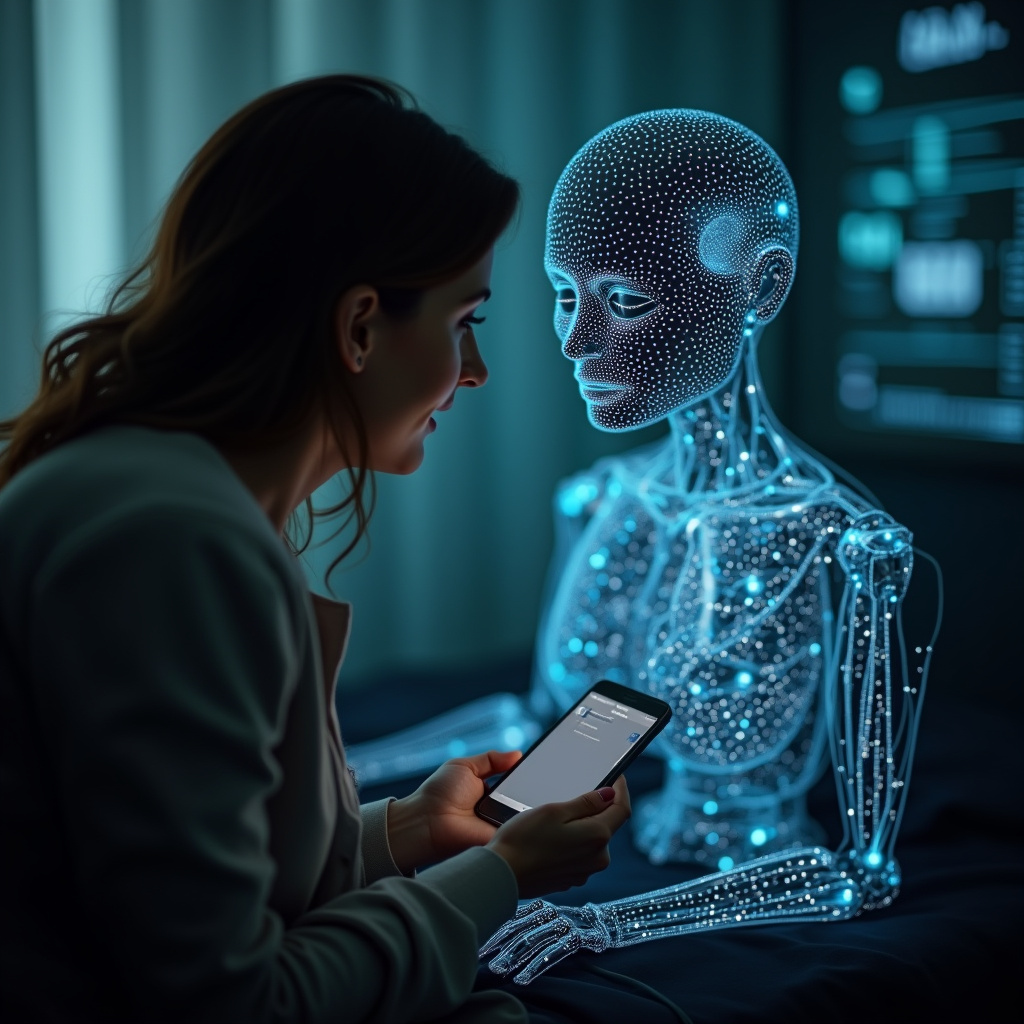
The Screen Between Us
Last Tuesday, my friend Sarah confessed she’d been using an AI therapy app for three weeks. She’s 34, works in marketing, and hasn’t had a panic attack since downloading it. That’s not nothing. But when I asked what she missed about her old human therapist, she paused for a full ten seconds. “The silence,” she finally said. “The way she’d just wait for me to find my own words.”
AI apps like Woebot and Wysa are everywhere now. They’re cheap. They’re available at 3 a.m. when your brain won’t shut up. They use cognitive behavioral therapy techniques—real, evidence-backed stuff—and they never roll their eyes or check the clock. But can an algorithm truly understand what it’s like to lose your mother? Or to feel that ache in your chest when you’re not even sure why you’re sad? I’m not sure it can. Honestly, most people overlook this: therapy isn’t just about coping skills. It’s about being seen by another human being. So here’s the thing—would you trust a robot with your rawest, messiest self?
When Algorithms Listen
Here’s a scenario. It’s 2 a.m., your partner is asleep, and your thoughts are spiraling about a work mistake from 2019. You open an app, type, “I feel like a failure,” and within seconds, a friendly chatbot says, “That sounds really tough. Let’s unpack that thought.” It guides you through a quick exercise, and suddenly, you’re breathing slower. That’s powerful. For someone in a rural area with no counselors nearby, or for someone who can’t afford $150 per session, this is a lifeline.
But let’s not pretend it’s the same as a person. I remember my own therapist, years ago, noticing I’d worn the same sweater two sessions in a row. She didn’t say it, but her glance told me she saw me. A bot can’t do that. It can’t smell the coffee on your breath or notice you’ve lost weight. It won’t challenge you with a raised eyebrow. And yet—does that matter if it still helps you function? I’m torn. The data says these apps reduce symptoms of anxiety and depression. But data doesn’t capture the loneliness of pouring your heart out to a screen.
The Messy Human Magic
There’s a moment in therapy when your counselor leans forward, and you just know they’re about to say something you’ll remember forever. Mine once told me, “You’re allowed to be angry at the people you love.” I cried for twenty minutes. Can an AI do that? Maybe one day. But right now, it’s more like a really smart journal that talks back. It’s missing the mess—the accidental insights, the shared laughter, the way a therapist’s own vulnerability can model something profound.
Don’t get me wrong. I’m not anti-tech. I think these apps are brilliant for what they are: a first step, a bridge, a tool. But replacing human counselors entirely? That feels like saying a photograph can replace a hug. It’s a snapshot, not a presence. So here’s my take: use the app if it helps. But don’t fool yourself into thinking it’s the same as a person who’s dedicated their life to understanding yours. Because until an AI can sit with you in your darkest hour and simply be there—no advice, no exercises, just presence—we’ll still need each other. And honestly? I think we always will.