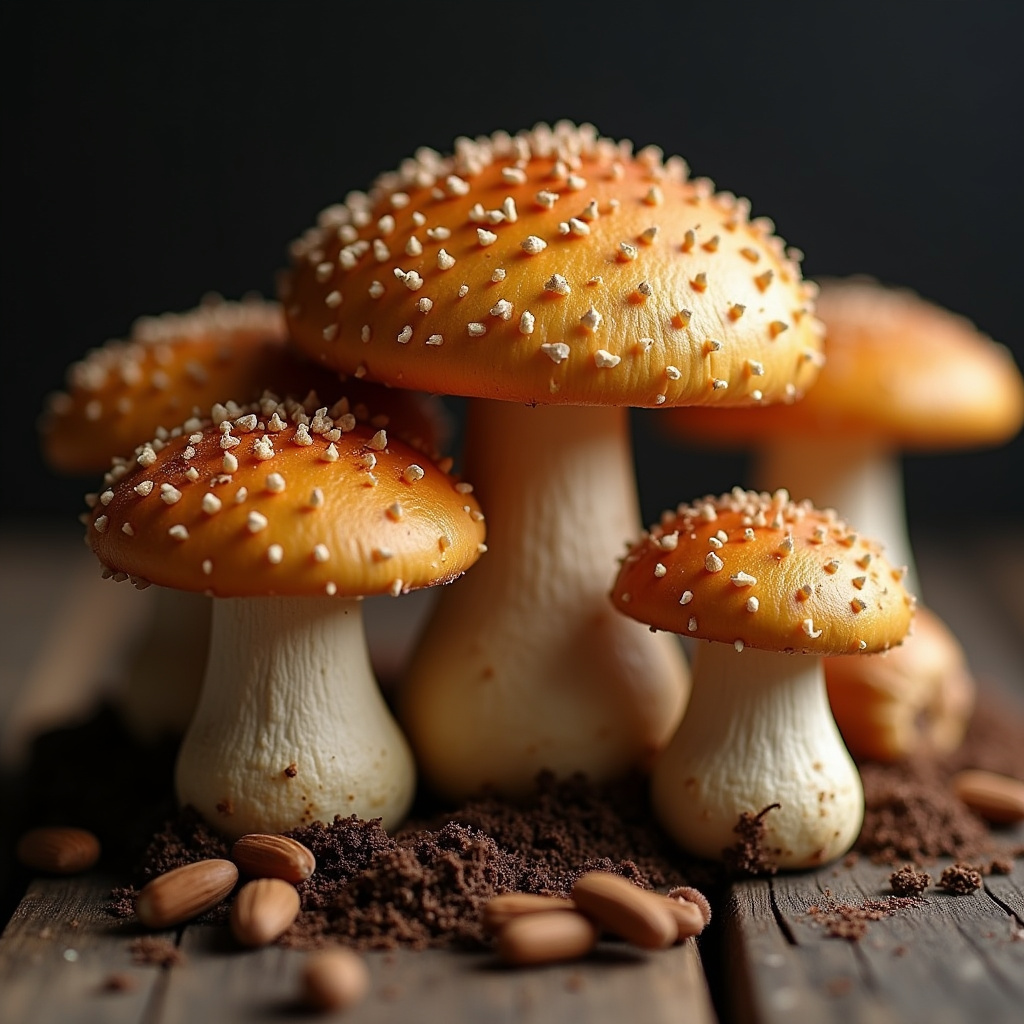
Step into any health food store or scroll Instagram for five minutes and you’ll see them—reishi, lion’s mane, cordyceps. Powders, pills, gummies, even mushroom coffee. According to a Grand View Research report I came across, adaptogenic mushrooms had already grown into a $12.3 billion global market by 2023. I’ll be honest: when the buzz first reached me, I rolled my eyes hard. Another superfood craze? I’ve watched this movie before. Remember açai bowls? They were going to fix everything. So do these fungi actually deliver on the energy front, or are we just shelling out premium prices for a placebo?
The Hype vs. The Biology
Adaptogens are substances that supposedly help your body cope with stress—physical, chemical, biological, you name it. The concept isn’t new; Soviet scientists poked at it back in the 1940s, trying to boost soldier performance. But mushrooms like cordyceps come with a much stranger backstory. Cordyceps sinensis was traditionally used by Tibetan herders who watched yaks get unusually energetic after grazing on it. These days you can grab a box of Four Sigmatic mushroom coffee for fifteen bucks. How would a fungus actually crank up your energy, though? The working theory revolves around adenosine triphosphate—ATP—your cells’ energy currency. Cordyceps contains cordycepin, a compound that mimics adenosine and might help your body use oxygen more efficiently. One 2010 study in the Journal of Alternative and Complementary Medicine found that older adults taking cordyceps bumped their exercise performance by 7% over 12 weeks. Not exactly earth-shattering. But it’s not nothing either. Lion’s mane plays a different game. It doesn’t go after physical energy directly—it’s more about mental clarity, stimulating nerve growth factor in ways that could sharpen focus. Reishi? That’s the chill pill of the family, leaned on for sleep and immunity rather than a jolt. So if you’re downing a reishi latte expecting to crush a workout, you might walk away disappointed. Is the energy lift real, or just a pleasant side effect of better sleep and less stress?
What the Science Actually Says
Time to get a little nerdy. The research on adaptogenic mushrooms is intriguing but painfully thin. Most studies are small, short, or conducted on animals. That cordyceps study I mentioned? Twenty participants. A 2021 review in Frontiers in Pharmacology combed through dozens of papers and concluded that while these mushrooms show anti-fatigue effects in mice, human trials are “scarce and often methodologically flawed.” Yikes. One detail stuck with me, though: in a trial where cyclists took cordyceps for five weeks, their VO2 max didn’t improve significantly over the placebo group. Yet they reported feeling less wiped out. Perception counts, doesn’t it? Lion’s mane has slightly sturdier data for cognitive function. A 2009 double-blind study in Japan gave 30 people with mild cognitive impairment either lion’s mane or a placebo. After 16 weeks, the mushroom group scored higher on cognitive tests—but the gains vanished once they stopped taking it. Reishi? Mostly immune and anti-inflammatory studies, with energy treated as a secondary outcome. So we’re stuck with a patchwork. I’ve spoken with researchers who roll their eyes at the word “adaptogen” because it’s so slippery. One nutritionist told me flat-out, “It’s a marketing word, not a scientific one.” Why do we clutch these studies as proof when they’re barely more than hints?
Why You Might Feel More Energized Anyway
This is where things get interesting. Even if the direct energy bump is modest, adaptogens could work in roundabout ways. Stress is a notorious energy vampire. If reishi helps you sleep deeper, you wake up less groggy. If lion’s mane clears the brain fog, you feel more motivated to get moving. Cordyceps might improve oxygen uptake just enough that your morning jog feels a hair easier. I tried a mushroom blend myself for two weeks—Om Mushroom’s Master Blend powder tossed into my smoothie. The first few days, crickets. By day five, I realized I wasn’t reaching for my 3 p.m. coffee. Placebo? Could be. But my Garmin watch showed my resting heart rate dipped by 3 beats per minute, which usually tracks with lower stress for me. Not a clinical trial, but it’s a data point. The ritual matters too. Whisking up a frothy mushroom latte feels like self-care, and that psychological lift isn’t something to dismiss. Still, there’s an elephant in the room: the supplement industry is famously underregulated. A 2022 ConsumerLab analysis found that 40% of mushroom supplements didn’t contain the labeled amount of active compounds. You might be sipping rice flour. Is it the mushrooms doing the work, or just the belief that they’re working?
The Risks Nobody Talks About
Adaptogens sound natural, so they must be safe, right? Not exactly. I’ve seen that assumption backfire before. Mushrooms are biologically active—they can tangle with medications, especially blood thinners or diabetes drugs. Reishi, for instance, might slow blood clotting. If you’re on warfarin, that’s a real problem. A 2018 case report in the Journal of Medical Toxicology documented a woman who developed liver toxicity after taking reishi powder for two months. Rare? Sure. But it happened. Lion’s mane can trigger itching or digestive upset in some people. Cordyceps might overstimulate the immune system if you have autoimmune issues. The lack of long-term safety data makes me uneasy. Most studies span weeks, not years. Sourcing is the wild west too. Mushrooms can soak up heavy metals from soil, so you need brands that test rigorously. I always look for third-party certification like NSF or USP—but even that isn’t a guarantee. How many of us actually read the fine print before dumping a scoop into our morning brew?
So, Should You Try Them?
If curiosity’s got you, start low and go slow. Don’t expect miracles. Cordyceps might give you a slight endurance edge, lion’s mane could sharpen your focus by week three, and reishi may improve your sleep over a month. But they’re not a caffeine swap. They won’t jolt you awake. Think of them as subtle nudges, not shoves. And please, talk to a doctor if you’re on meds or pregnant. I’ve learned to be skeptical of any supplement that promises the world. The adaptogenic mushroom trend isn’t fading—it’s projected to hit $20 billion by 2030—but we need stronger research before I’ll call it a slam dunk. In the meantime, if a mushroom latte makes you feel good, that’s valid. Just know you might be buying a ritual as much as a remedy. After all, what’s more energizing: a fungus, or the belief that you’re doing something good for yourself?